
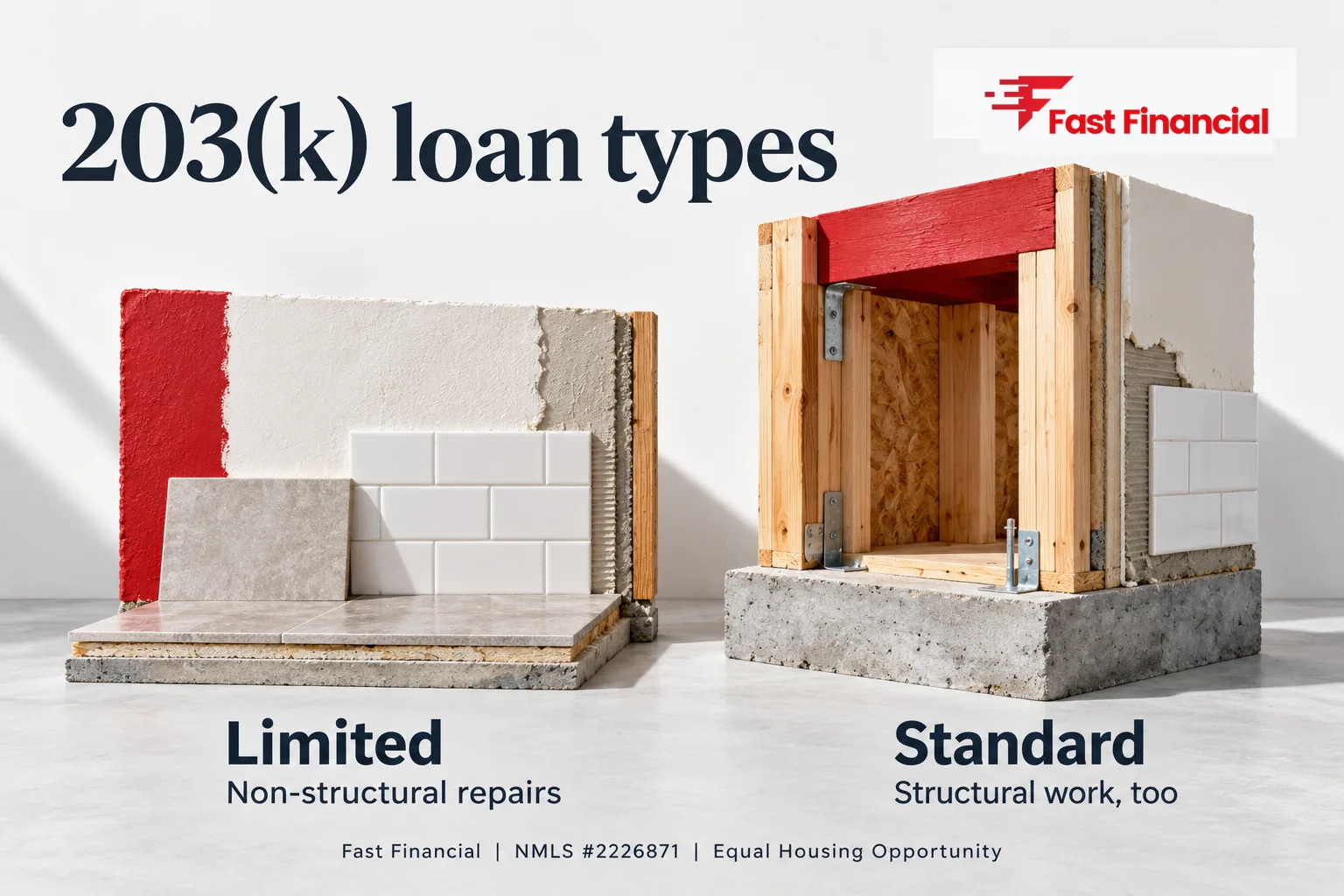
There are two FHA 203(k) loan types: the Limited 203(k) for non-structural repairs and updates, and the Standard 203(k) for major renovations, including structural work. The right one comes down to what your project needs, not which sounds easier. Pick wrong and you either can't finance the work or you take on paperwork you didn't need.
Both types bundle the purchase (or your current balance, if you refinance) and the repair budget into one FHA-insured mortgage. The difference is how big the job can be and how much oversight comes with it. For the full overview of the program, start with our guide to the FHA 203(k) loan.
What are the two types of 203(k) loans?
Here's the side-by-side:
| Limited 203(k) | Standard 203(k) | |
|---|---|---|
| Best for | Cosmetic and non-structural repairs | Major rehab, additions, structural work |
| Structural work | Not allowed | Allowed |
| HUD-approved consultant | Not required | Required |
| Plans and specs | Simple scope of work and contractor bids | Detailed plans, often with architectural exhibits |
| Repair budget | Capped by HUD (limits can change, so confirm current rules) | Larger projects; subject to the FHA loan limit for the area |
| Paperwork and timeline | Lighter | Heavier, slower |
The Limited version was previously called "Streamline." You'll still see that name in older articles and some lender materials.
What repairs does a Limited 203(k) allow?
A Limited 203(k) covers work that doesn't touch the structure of the home. Think of it as the "make it livable and current" loan. Common eligible work includes:
- Kitchen and bathroom updates, including cabinets, counters, fixtures, and appliances
- New flooring, interior and exterior paint
- Roof repair or replacement
- HVAC, plumbing, and electrical updates
- Window and door replacement
- Energy-efficiency upgrades and water-saving fixtures
- Repairs needed to meet FHA property standards, such as peeling paint or safety hazards
- Accessibility modifications that don't alter the structure
What it won't cover: moving or removing load-bearing walls, foundation repair, room additions, or anything that needs structural engineering. If your project crosses that line, you're in Standard territory.
What repairs does a Standard 203(k) allow?
Everything the Limited covers, plus the heavy lifting. A Standard 203(k) can finance structural repairs, major reconfigurations, additions, and in some cases a home that is so far gone it's not livable today. In practice, that means foundation work, rebuilding or relocating walls, new rooms, and gut rehabs.
Because the scope is bigger, the oversight is too. A HUD-approved 203(k) consultant inspects the property, helps write the work plan, and signs off on the budget. Repair funds are held in escrow and released to the contractor in stages after inspections. Standard loans typically include a contingency reserve for surprises, which matters on older homes where opening a wall reveals something unexpected.
What isn't allowed on either type?
Both types are built for repairing and improving a primary residence, not for luxury upgrades. Items like a brand-new swimming pool, outdoor kitchen, or tennis court are generally off the table. Check with your lender before building a wish list, because eligibility turns on FHA guidelines and the specific property.
Also remember the loan is for owner-occupants. If you're buying to flip or rent, look at fix and flip loans for Antelope Valley investors or a DSCR loan instead. Veterans have another route in the VA renovation loan.
How do I choose between Limited and Standard?
Here's the move: scope the project first, then pick the loan.
- List every repair you want done. Include what the inspection flags, not just what you want.
- Sort the list. If any item is structural, you need the Standard. If everything is cosmetic or mechanical, the Limited is usually faster and cheaper to run.
- Get contractor bids. Both types require a written scope and bids. Your contractor should be licensed with the California Contractors State License Board and insured.
- Check the numbers that matter. The loan is sized on the home's value after improvements, and the repair budget has to fit under the FHA loan limit for your county.
- Run it past a lender early. Not every lender offers the Standard 203(k), and appetite varies.
One caution: don't squeeze a structural job into a Limited loan to avoid the consultant. The appraisal and inspections will catch it, and you'll lose time.
What do 203(k) borrowers still have to qualify for?
A 203(k) is still an FHA loan, so the usual rules apply: credit, income, and debt-to-income all count. See our breakdown of FHA mortgage requirements and FHA credit score requirements to see where you stand. Expect FHA mortgage insurance as well, which we explain in what mortgage insurance is and when it ends. Appraisals work a little differently too, since the value is based on the finished project. How FHA appraisals work covers what the appraiser looks for.
If you're building from the ground up rather than rehabbing, that's a different product; see how FHA construction loans work.
Frequently asked questions
Which 203(k) loan is easier to get?
The Limited 203(k) generally involves less paperwork because it needs no HUD consultant and no structural plans. Borrower qualifying is the same on both, and approval always depends on your full file.
Can I use a 203(k) loan to refinance instead of buy?
Yes. Both types can be used on a purchase or to refinance a home you already own and want to renovate. Our page on refinance options shows how the refinance side works.
Can I do the repairs myself on a 203(k)?
Lenders and FHA guidelines strongly favor licensed contractors, and many lenders won't allow borrower-performed work at all. Ask your lender before planning on do-it-yourself labor.
Do I have to live in the home?
Yes. FHA 203(k) financing is for owner-occupied homes, so you'd plan to move in as your primary residence.
Ready to see which 203(k) fits?
Fast Financial is a California mortgage broker (NMLS #2226871), and we can help you match your project to the right program and show you where you stand. Get your rate reviewed, or call us at (661) 512-4141. You're also welcome to stop by the office at 190 Sierra Ct Ste 324, Palmdale, CA 93550. Rates, terms, and eligibility vary by borrower and property.